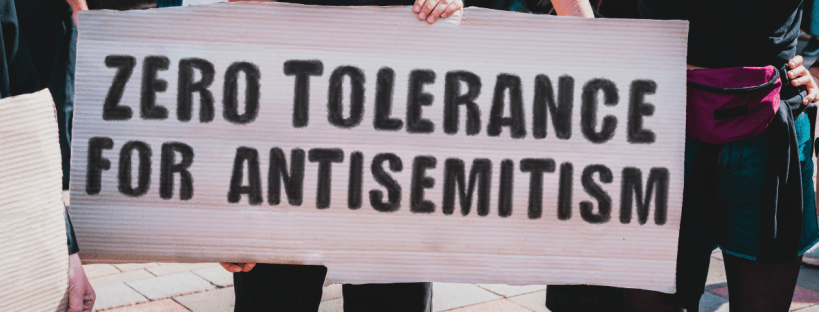
Our Year 6 students experienced a week of deep, rich learning about the Holocaust and the historical journey of their individual family as the culmination of their extended Project Heritage Learning Experience. A pivotal moment in this learning experience is a study of the Holocaust, a time when millions of people, especially Jewish people, were treated very unfairly and hurt in the most abhorrent way. It is almost serendipitous that, mixed in with this learning experience, various students across the Year 6 cohort personally experienced three different noteworthy incidents of antisemitism. Two of these incidents occurred at Bondi Junction and one was at a Performing Arts Festival that included numerous independent primary schools. The incidents involved teasing and taunting for wearing a kippah, intimidation with a Hitler salute or impersonation followed by some aggressive physical action, and a rejection of the students as people, simply because they are Jewish. These events impacted our students significantly, not only because the antisemitic act that they experienced bothered them, but also because it raised the question for them about what happened in this incident, why it happened, and how to respond to antisemitism when they encounter it. Best practice before responding to any incident with a child is to take some time to talk with other adults or experts to process for yourself what you are hearing, to address your own reactions, and to establish the best response pathway for the child. In this spirit, I conducted research about the best approach to antisemitism when supporting primary school-aged children. I contacted key organisations in Sydney, associated psychologists, and did some learning through one of my favourite education sources – Noam Weissman’s Unpacked for Educators.
I found that there is a very limited amount of guidance in this area when it comes to preparing or supporting children of primary school age. This reality check showed that antisemitism does not wait for children to come of age or enter high school, it happens when it happens, and our children need age-appropriate support to position them for success and equip them to respond. This ensures that we guide our children to be healthy, happy youngsters and then to take their place as the responsible adults who will hopefully make this world a better place for Jews and others.
Anti-Semitism is difficult for adults to understand, let alone children. No one wants to have to have a discussion with their children that people dislike them just for being Jewish. However, given recent events and a rise in antisemitic comments, it is important to have this painful conversation with your children so that they have an awareness of antisemitism, have some ideas of how to respond and understand that it is never okay to say hurtful things to others. Our psychologists ask us to remind them that they are not alone and they are not helpless. When antisemitic incidents occur, parents (and students) have responded with an attempt to keep their child safe by hiding symbols of Jewish identity such as a kippah or to feign a different identity and go undercover. These responses are normal and sensible, and no one will ever judge these safety measures harshly. Instead of hiding away, however, I prefer to establish a safe environment for the Jewish community and a zero-tolerance approach to antisemitic commentary. In this vein, I ask, ‘what is the best way to move forward when bad things happen?’ Antisemitism did not stop when the holocaust ended. Instead, the Holocaust was a manifestation of the antisemitic myths propagated over the preceding centuries and these myths continue today. Antisemitism needs to be called out firmly when it is encountered, and the myths need to be deconstructed.
What is the best way to support our children?
Research shows that one of the best ways that we can help prepare our children to cope with discrimination and intolerance is by being open about it. When we show our children that these topics, though tough, are not taboo, we let them know that they can always come to us with questions or thoughts about life’s scary situations. If we tell our children to conceal symbols that reveal their identity, we confirm that the world is an unsafe place and that they are not desirable people.
The American Psychological Association (APA) stresses that for children who belong to groups that are likely to be targets of discrimination, it’s vital for parents to have ongoing, honest discussions with their children, rather than shying away from the subject. The APA also recommends the following:
- When talking about this tough topic, the language and content should be age-appropriate. Keep things basic. Young children, especially, need simple information that is also balanced with reassurance.
- Encourage children to ask questions.
- Give them strategies so they learn how to deal with being the potential target of discrimination but don’t create paranoia.
- Develop healthy comebacks or responses to hurtful discriminatory statements such as, “What an unkind thing to say!” or, “I disagree with you, so I am just going to walk away right now.”
- Model good behaviour for children who are always watching the adults in their world.
The National Child Traumatic Stress Network remind us that it is common for people to experience fear, anxiety, worry, confusion, and anger when antisemitic incidents happen. Some may even experience thoughts that the world is no longer safe and struggle to make sense of why this is happening. This was highly evident in our students who also felt disappointed in their own response as they thought they should have done more, whilst they also felt confused because they did not know what the correct actions looked like in such a circumstance.
As part of our educational journey, the school provides children’s books related to antisemitism which are accompanied by discussion to jump-start conversations about this challenging topic.
The following narrative is a suggested way to start the conversation, or respond to an experience, where insults or name-calling occurred, possibly when a family is walking home from shule, or where historical or current news footage is viewed by our early primary school children:
Child: “Why did they do that and what do they want?”
Adult: “Sometimes people can say things that are mean and hurt our feelings. Some people may say these things to us just because we are Jewish. We are very proud to be Jewish. If someone ever tries to be hurtful to you because you are Jewish, it is important for you to tell me and to tell your teacher. We will tell our superhero community protectors and they will keep us safe and tell those people to stop. Between them, your teachers and us, your parents, you will be safe. No one should be bullied or be made to feel bad because of who they are, what they look like, or what they believe.
For older children and teens: Discuss these incidents from an historical perspective, including World War II and the civil rights movement and emphasise that at all times, there were also good people that took a stand of support and that the world is not a globally hostile environment.
As you begin conversations, recognise that this is an important opportunity to instil values and beliefs about respect, tolerance, and diversity. Your children mirror what they hear and see from you. Their lessons in life occur all day, every day and these lessons turn into their values, beliefs and actions.
Seven things which could assist your primary school-aged child after an antisemitic incident.
Dealing with antisemitism can be challenging, especially for primary school-aged children. It’s important that schools across all sectors educate their students in tolerance, respect, and a factual understanding of the Jewish people and indeed other minority groups. Similarly, Jewish Day Schools need to provide children with strategies to cope with, understand, and respond to such situations.
- Education and Awareness
Teach children about their Jewish heritage, culture, and history. Help them understand the significance of their identity. Explain the concept of antisemitism in age-appropriate terms. Let them know that prejudice exists and that it’s not their fault. It is valuable to explain that antisemitism is a big word that means some people didn’t like Jewish people for no good reason. They spread untrue stories about them, like saying they were bad for trying to control banking, business, the government and media and they were different because they were named as the “chosen people”. These untrue stories were like rumours that grew into hurtful beliefs and terrible behaviours against Jewish people. People who wanted to create hate against Jewish people used myths and made-up stories to make others scared of, or dislike, Jewish people. But remember, these stories were not true at all and when others talk about these nonsense stories it is important to simply say that is not true and not allow the narrative. - Open Communication: Keep children connected and able to share their experiences safely
Create an environment where children feel comfortable discussing their feelings and experiences. Encourage them to talk about any incidents they encounter. Listen actively and empathetically to their concerns. Validate their feelings and assure them that you’re there to support them. Some children don’t want a fuss to be made, so when there is an incident and the child reports it, it is important to listen and record the details and then take the follow-up actions offline, away from the child so that they don’t feel spotlighted or interrogated by the event. This is particularly evident in our pre-teens. Nevertheless, it is also important to explain to them that they need to be courageous in so far as they name and notice all the details of the incident and report it to their safe person (a parent or teacher or event security officer) so that the adults can respond to it using their excellent training. - Build Resilience
Teach resilience by emphasising their strengths and encouraging self-confidence. Help them understand that they are not defined by the opinions of others. Highlight the achievements and contributions of Jewish individuals throughout history to foster a sense of pride. Resilience is explained as a child’s capability to respond to and overcome challenges when they are encountered. The toolbox of skills which includes a practised response in the event of an incident, knowledge of who to tell, and the self-talk that they are safe in a community that is well-equipped to manage this challenge, go a long way to ensure they respond courageously and competently to overcome the negative aspect of the experience. Support from their parents or caregivers will help with feelings of safety and security. - Assertiveness and Boundaries
Resilience also comes with being assertive and knowing how to define personal boundaries. It is important that we keep our children safe. We can do this by educating them on how to be assertive without being confrontational, as confrontation can lead to violence and increased aggression. A way of enabling them to express their feelings and stand up for themselves calmly and confidently could occur using a discussion about setting personal boundaries and letting them know it’s preferable to remove themselves from hurtful situations. Children and teens need adult assistance to come up with a response should anyone say or do anything that makes them feel uncomfortable.
At Moriah College, I have coached our upper Primary School students to say, “That action, or statement, is hurtful to me/us and it makes me/us feel very sad. Please stop. It is important enough for me to report what happened (to others) but for now I am going to leave and walk away. Let’s leave this alone.” Some students feel embarrassed that they didn’t do more, so this gives them permission to limit their own active response and validates that they need to tell the significant adults in their lives, because the adults are charged with community protection. - Seeking Help
Children may have different reactions to these events. It is important to always watch over our young following an incident to ensure that we note the signs that indicate struggle or unwellness in the child. Indicators include:
• Separation anxiety
• Changes in eating/appetite
• Changes in sleep pattern
Generally, these reactions lessen relatively quickly, but they could also indicate that a conversation starter is necessary so that the child can unpack what happened for them. Adults also need to be aware of the content of their own social interaction and set limits on their alarmist or alarming discussion.
During all protective behaviour education, we teach children to have automatic recall of who they can turn to for help. This context is no different and children need to be reminded of who they can turn to for help, such as parents, teachers, school wellbeing personnel, or trusted adults such as their school or shule security representatives. Encourage them to report any incidents of antisemitism to appropriate authorities. - Understanding Diversity
Teach children about diversity within their own culture and in other cultures as well. This can help them appreciate differences and combat stereotypes. It is critical that when our students or children comment negatively about other cultures or race groups, we provide a consistent message. Respect, factual understanding, and tolerance towards all is important and these lessons should be front and centre of our education program. - Role-Playing and Empathy
It is evident that children and adults alike are so shocked when they encounter an antisemitic incident, that they either do nothing, pretend to not be Jewish or they act aggressively and might not achieve anything, possibly even doing themselves a disservice. By using role-play scenarios, we help children practise how to respond to insensitive remarks or actions. This can boost their confidence and competence in real-life situations. Additionally, it is important to offer education to the offending party, and a suggested script is something we offer to schools to read to their students who have committed offences. At all times, it is also important to develop empathy in our Jewish Day School students by helping them understand the impact of hurtful words and actions on others so that they firstly exercise compassion and respect across their own peer group and model tolerance and respect for those that they encounter outside of their community group, regardless of background. This goes a long way to ensure our little people grow into great big people.
The Hope
Remember that every child is unique, and their responses to antisemitism may vary. Tailor these strategies to the child’s personality and comfort level. Regular conversations about their experiences and feelings, and purposeful preparation for possible antisemitic exchanges, can play a crucial role in helping them navigate these challenging situations. Awareness of the above realities, a repertoire of responses and strategies, knowledge of the facts, and love of self and the community to which our students belong, will go a long way to change the wellbeing and capability of our young and the future of our Jewish communities. Am Yisrael Chai.
ABOUT THE AUTHOR
Lynda Fisher is the Head of Primary School at Moriah College in Queens Park, NSW.
 moriahcollegeblog.com