
Introducing the traditions of Rosh Hashanah to children during their Early Learning years nurtures their connection to their cultural heritage, instils in them the values of gratitude and community, and fosters a deep sense of belonging. These early experiences, filled with the warmth of family gatherings, the sweetness of apple and honey, and the sound of the shofar, create lasting memories that shape their understanding of their culture and heritage.
By involving our children in the celebrations and giving them each a special responsibility or task, they will all feel like they’re part of the preparations, and enjoy this special time of the year.
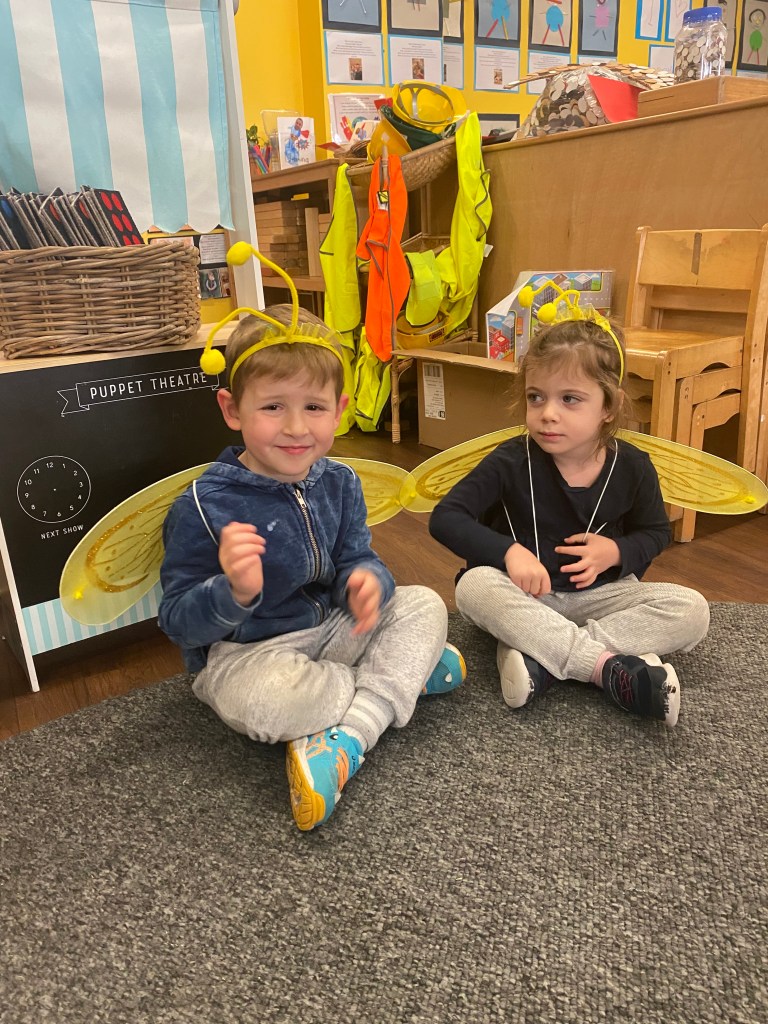
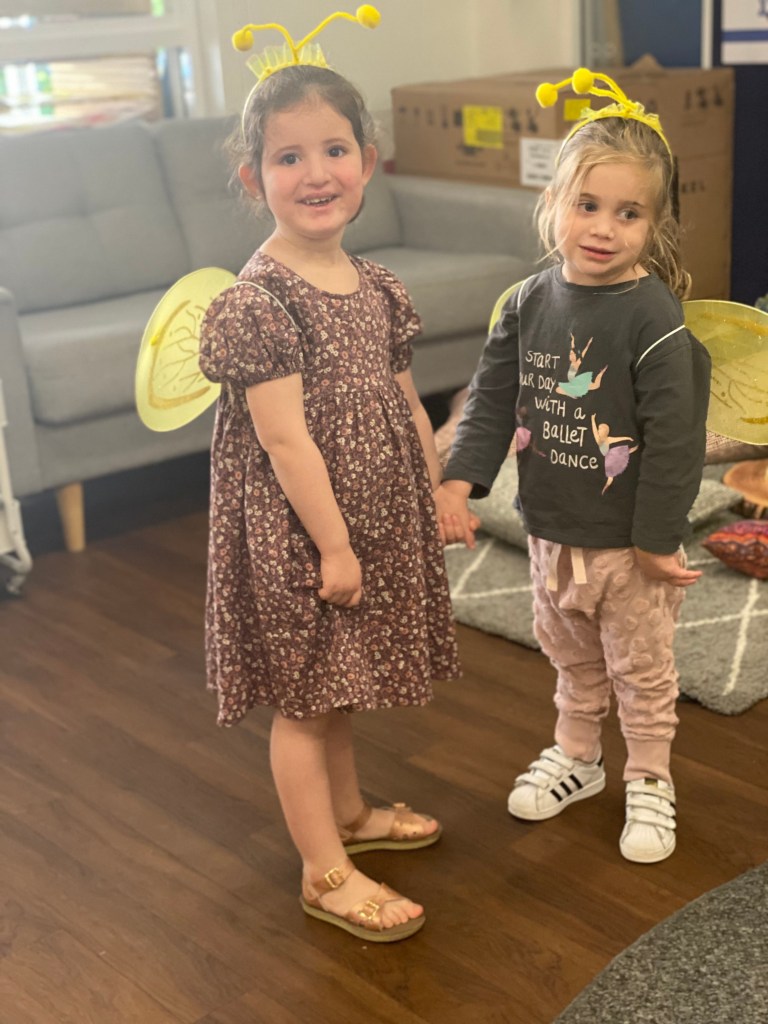
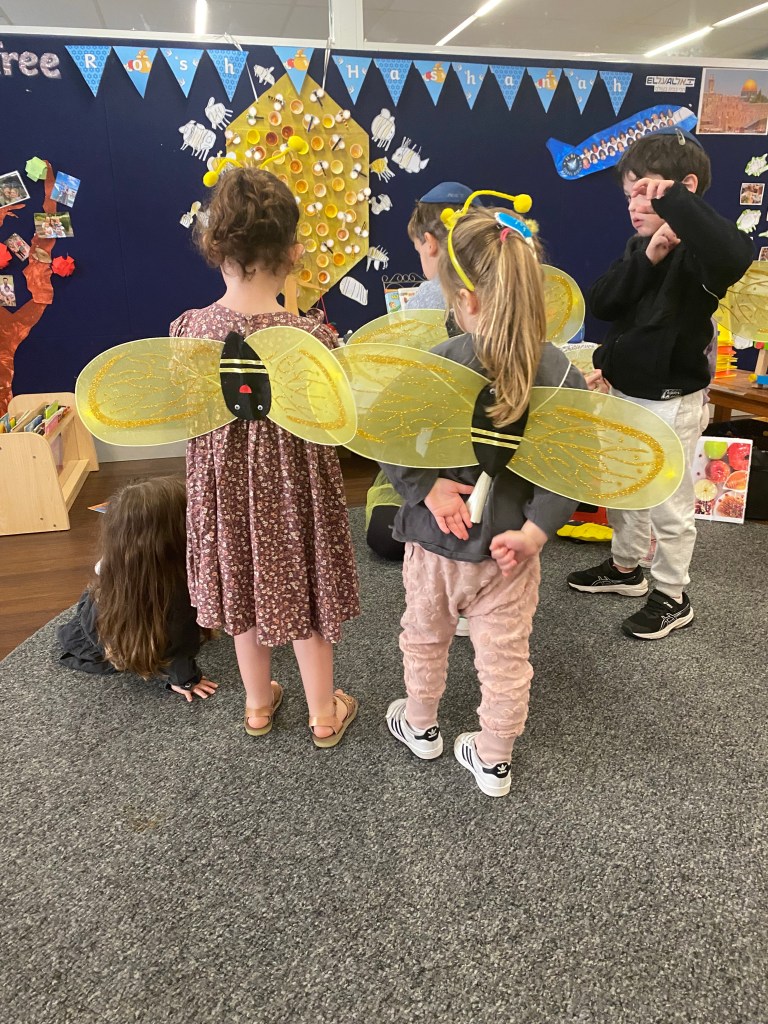
During the last few weeks, our Early Learners have started their Jewish Studies lessons by looking at the Rosh Hashanah items inside the chag box. The lessons have been filled with delightful experiences, starting with the tradition of dipping apples in honey and our children’s faces lit up with wonder as they savoured the sweet combination, symbolising hopes for a year filled with sweetness and blessings. We all pretended to be devorim (bees) and flew around the classroom. We sang tapuchim udvash le Rosh Hashanah (see the words below) and learnt a new dance to the song Matana LeRosh Hashana. Shalom the sheep and his little baby sheep Shlomit visited each class to tell the children a story about their special friends ‘shofy and blowfy’! You can read the story below.
Ask your children to sing you the songs, show you the dances and tell you all about what they have learned about Rosh Hashanah.
Here are a few ideas to get you started – we have talked about all these things in our lessons.
1. Sweet symbols – the sweet symbols associated with the holiday, such as apples and honey, are eaten to wish for a sweet and happy year ahead.
2. Shofar – a traditional ram’s horn trumpet is blown during Rosh Hashanah services. The sound of the shofar is like a special wake-up call for the new year!
3. Tashlich – is the tradition of casting breadcrumbs into a flowing body of water to symbolise the casting away of one’s sins. It’s a way to start fresh, like taking a spiritual bath.
4. Family time – coming together to celebrate, with special prayers and delicious food.
5. New Year greetings – like Shanah Tovah!
6. Reflect and connect – thinking about the past year and also about hopes for the year ahead.
With the words of the famous song Avenu Malkeinu – write us in the book of life, we wish you Shana Tova Umetukah.
Morah Vanesa, Uncle Velvel, and all of us at the ELCs


The story of Shofy and Blowfy
Rabbi Yom tov was so upset because he had two shofars and he didn’t know which one to blow. He didn’t want to upset either of them so Rabbi Yom tov decided to ask each shofar a question, and whichever gave the best answer would be the shofar used on Rosh Hashanah.
He asked them both – “If I blow you on Rosh Hashanah, what will you be thinking of ?”
Shofy replied “I will think about Hashem as the king of the whole wide world and the heavens above.” Blowfy replied “I will think that it’s time to do teshuva, time to say I’m sorry and to be good.”
Rabbi Yom tov loved both answers. Then he had an ingenious idea!
He could blow Shofy on the first day of Rosh Hashanah and Blowfy on the second day. And that is what he did! What a wonderful idea of sharing shofars.
Tapuchim Udvash
Tapuchim u dvash
Tapuchim u dvash le Rosh Hashana x2
Shana tova, shana metukah
Shana tova, le kol hamishpacha
Tapuchim u dvash le Rosh Hashana x2
Translation of the song:
Apples dipped in honey for Rosh Hashana
A good year, a sweet year
A good year to the whole the family
Apples dipped in honey for Rosh Hashana x2
Rosh Hashanah Milon (dictionary):
Apple –Tapuach- תפוח
Apples-Tapuchim- תפוחים
Sweet year-Shana Metuka- שנה מתוקה
Honey-Dvash- דבש
Shofar- שופר
Bee-Devorah- דבורה
Bees-Devorim- דבורים
Beehive-Kaveret-כוורת
Rosh Hashanah cards-Egeret Bracha- איגרת ברכה
 moriahcollegeblog.com