Written by the ELC Team
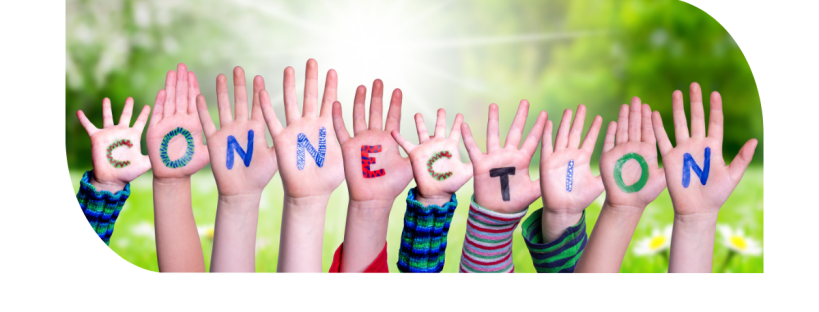
In our Prachim program, we’ve embarked on a journey that extends beyond classroom activities and delves into the heart of connection-building. Through our focus on ‘Jewish Identity’, ‘Where We Belong’, and ‘Our Home Australia’, we’ve not only engaged in enriching learning experiences but also fostered a profound sense of belonging and interconnectedness.
Our year in the Prachim Class at Dover Road began with encouraging connections through our whole-school “Just Say Hello” campaign, and celebrating Tu Bishvat. As we welcomed the new year of the trees, we also welcomed our families into our new Prachim class in the Hamakom space. The children engaged in hands-on, creative and open-ended learning experiences, including painting trees on the easel, exploring the garden, and constructing leaf crowns to wear on the special Chag. As we reflected on the children’s painted trees, we realised that no two trees were the same, just like the children in our class. We displayed the children’s tree artwork at the entrance to our class and added a textured soil painting below it, to not only represent the roots of the garden, but also the roots connecting us to each other and our school. We created a strong sense of belonging to our new Prachim class by adding photos of our children’s families and called it our ‘Family Forest’.

A discussion about Australia Day sparked our children’s next area of interest. The educator asked the question, “what makes Australia such a special country to live in?”. This led the Prachim class to do a deep-dive search into all things Australia. Following the lead of the children, we embarked on an immersive exploration of Australian animals, cuisine, culture, and the rich heritage of Indigenous peoples.
As our project unfolded, we introduced stimuli inspired by Australia’s natural landscapes, flora, and fauna to nurture their curiosity. The children eagerly delved into learning about iconic Australian creatures, including the koala, emu, dingo, crocodile, kangaroo, platypus, cockatoo, and rainbow lorikeet. We learnt new songs and played group games to remember interesting facts about these Australian animals, as well as the ways they have adapted to the Australian environment. We then moved on to learning about Australia’s key landmarks starting with the Opera House and the Harbour Bridge. We created our own versions of them using different recyclable craft materials, spoke about the shapes we were using, and developed our skills using scissors and tearing techniques.

We also created beautiful Australian sunset landscapes of Uluru using watercolour, where the silhouette of Uluru, the kangaroos and the emus sparked a discussion about camping, campfires and using fire as a night light. To further the children’s interest, we created a cooking experience, making damper using flour, water, and sugar. Prachim really enjoyed eating the warm, fresh damper straight out of the oven.
To enhance our sense of belonging, families were encouraged to send in family photos of themselves at Australian landmarks, which have been displayed alongside the children’s work, connecting home, land and children together. One of the photos was from Uluru, arguably Australia’s most famous landmark, representing our proud Aboriginal and Torres Strait Islander culture, as we acknowledge the Indigenous Australians as the first inhabitants of this land.

Our exploration of Australia’s rich tapestry, from its iconic landmarks to its indigenous heritage, has been more than just educational; it’s been a journey of discovery and appreciation. By incorporating family photos taken at Australian landmarks, we’ve woven a thread that connects home, land, and children, emphasising the importance of cultural heritage and familial bonds.
As we venture into the metaphorical depths of the Great Barrier Reef next week, we’re not merely exploring marine life; we’re diving deeper into the essence of connection and learning. Maria Montessori’s words, “The goal of early childhood education should be to activate the child’s own natural desire to learn,” resonate profoundly as we strive to ignite and nurture each child’s innate curiosity and thirst for knowledge, creating an educational environment where learning transcends the boundaries of the classroom and becomes a lifelong journey of exploration and connection.
 moriahcollegeblog.com