
Written by Jo Jacobson, School Psychologist
Imagine a classroom where young children are learning to navigate their emotions with ease, focusing on their breathing when they feel overwhelmed, and understanding how to respond to challenging situations with calm and clarity. This is what our Early Mindfulness Program in the Early Learning Centres aims to achieve. By integrating mindfulness practices, we are helping children build essential skills such as self-awareness, empathy, and emotional regulation from an early age.
Developing mindfulness and emotional skills early in life is crucial because it lays the foundation for emotional and mental wellbeing throughout a child’s life. These skills help children manage their emotions, improve focus, and build resilience, which are vital for their overall development. Research has shown that mindfulness can enhance students’ ability to learn, promote better mental health, and even improve physical wellbeing. In a world that is increasingly stressful and fast-paced, teaching mindfulness provides children with tools to cope with life’s pressures more effectively.
Embracing mindfulness offers numerous benefits: children learn to manage their emotions, develop greater empathy, and improve their concentration. These skills not only support their academic success but also their overall wellbeing and happiness.
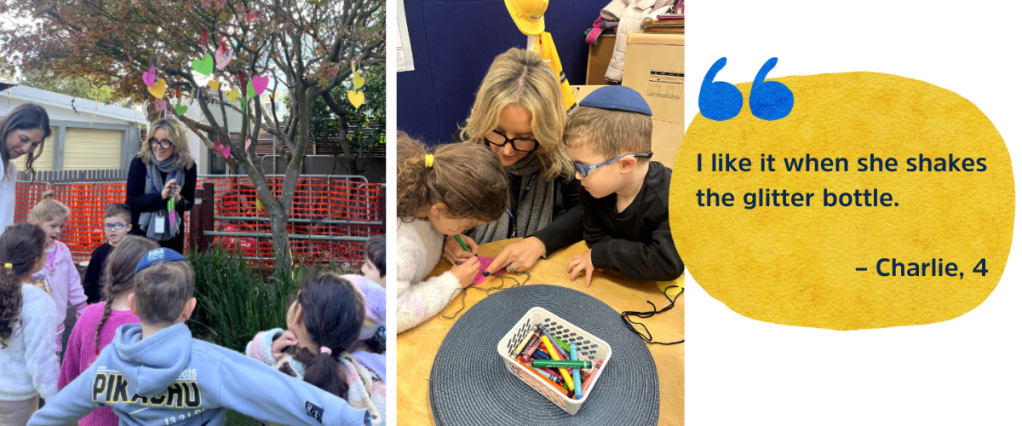
The children across our Centres have been very eager participants in our Early Mindfulness Program, offering lots of wonderful observations and insights. They have been learning how to take a break/rest from a busy mind and body. For example, they watched glitter in a jar slowly settle after being shaken, and discussed how this can represent our minds settling after being busy or overwhelmed. The students have contributed thoughtful suggestions on how to calm down, and they are encouraged to practise these strategies both inside and outside the classroom.
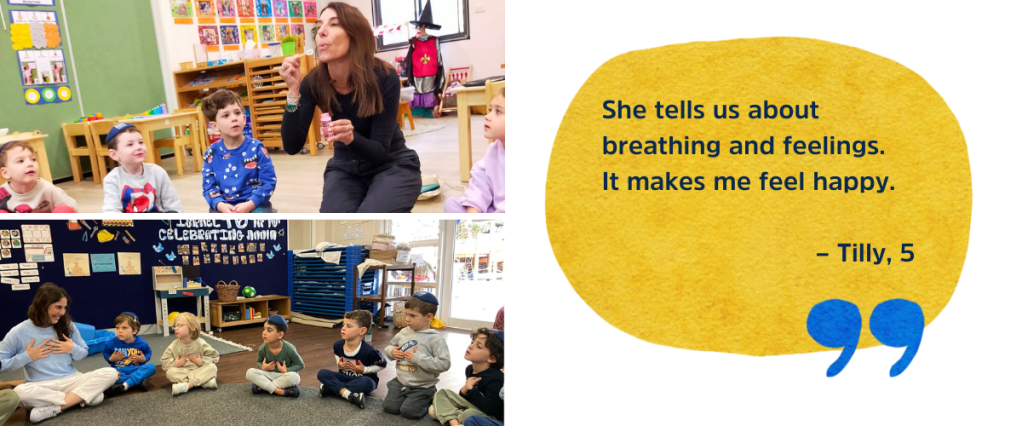
We have also begun developing body and breath awareness through exercises that involve placing their hands on their abdomen and practising different breathing techniques, such as ‘caring hands breathing,’ ‘hot chocolate breathing,’ ‘candle breathing,’ and ‘finger breathing.’ The children have also been practising the five senses activity, known as the 5-4-3-2-1 method, which is a grounding exercise to help manage worry. This technique involves identifying five things you can see, four things you can touch, three things you can hear, two things you can smell, and one thing you can taste.
To support their social and emotional development, we have been reading stories that teach these competencies. For instance, The Angry Octopus helps children learn to manage their anger and understand that they have control over their reactions. We’ve also explored books like When I am Feeling Kind to help children recognise and understand a range of emotions, emphasising that it’s normal to feel sad, angry, happy, or scared at different times.

Parenting is both a rewarding and challenging journey. Amidst the joy of raising your children, finding moments of calm and connection can sometimes feel like searching for an oasis in the outback. By practising mindfulness and cultivating emotional awareness, you set an example for your child on how to manage their feelings and remain present.
Mindfulness allows us to quiet our minds and fully appreciate the laughter, curiosities, and unique personalities of our children. We believe that these foundational skills will equip them to navigate all of life’s challenges throughout their school years and beyond.
9 ways to introduce mindfulness at home:
- Mindful Breathing: Practise deep breathing exercises with your child. Use simple techniques like “smell the flowers” (inhale deeply through the nose) and “blow out the candle” (exhale slowly through the mouth). Make it fun by pretending to smell different types of flowers or blow out imaginary candles.
- Mindful Listening: Turn listening into a fun game. Have your child close their eyes and focus on the sounds around them. After a few moments, ask them to describe what they hear, whether it’s the sound of birds, cars, or the wind.
- Mindful Eating: Transform snack time into a mindful activity. Encourage your child to notice the colours, textures, and flavours of their food. Ask questions like, “What does this apple feel like in your hand?” or “What flavours can you taste?”
- Body Scan: Guide your child through a body scan to help them become more aware of their physical sensations. Start with their toes, asking if they feel warm or cold, and then move up the body, asking if each part feels relaxed or tense.
- Mindful Movement: Integrate mindfulness into physical activities. Encourage your child to engage in slow, gentle stretches or mindful walking, paying attention to how their body feels with each movement.
- Calm Down Jars: Create “calm down jars” with your child using glitter, water, and food colouring. Shake the jar and watch the glitter settle to help them calm their minds and bodies.
- Emotion Stones: Paint stones with different facial expressions representing various emotions. Use these as prompts to discuss feelings and help your child articulate how they are feeling.
- Emotion Chart: Develop an emotion chart with pictures or emojis to represent different feelings. Talk with your child about when they might feel happy, sad, or angry, and discuss strategies for managing these emotions.
- Empathy Building: Read stories that focus on different emotions and discuss how the characters might be feeling. Ask your child how they would feel in similar situations and use role-play to practise empathy, such as sharing toys or taking turns at a birthday party.
Resources for Further Reading and Practice:
Many apps can help you and your child practise mindfulness and breathing exercises, such as Smiling Mind, Calm, Headspace for Kids, and Cosmic Kids Yoga. Students love to use these in their free time for guided meditations and mindfulness activities.
Recommended Books:
- Mindful Monkey, Happy Panda by Lauren Alderfer
- The Feelings Series by Trace Moroney
 moriahcollegeblog.com